ATOM
Timeline
2023 – 2025
Category
Other
Industry
Automotive
Status
✅ Finished
Overview
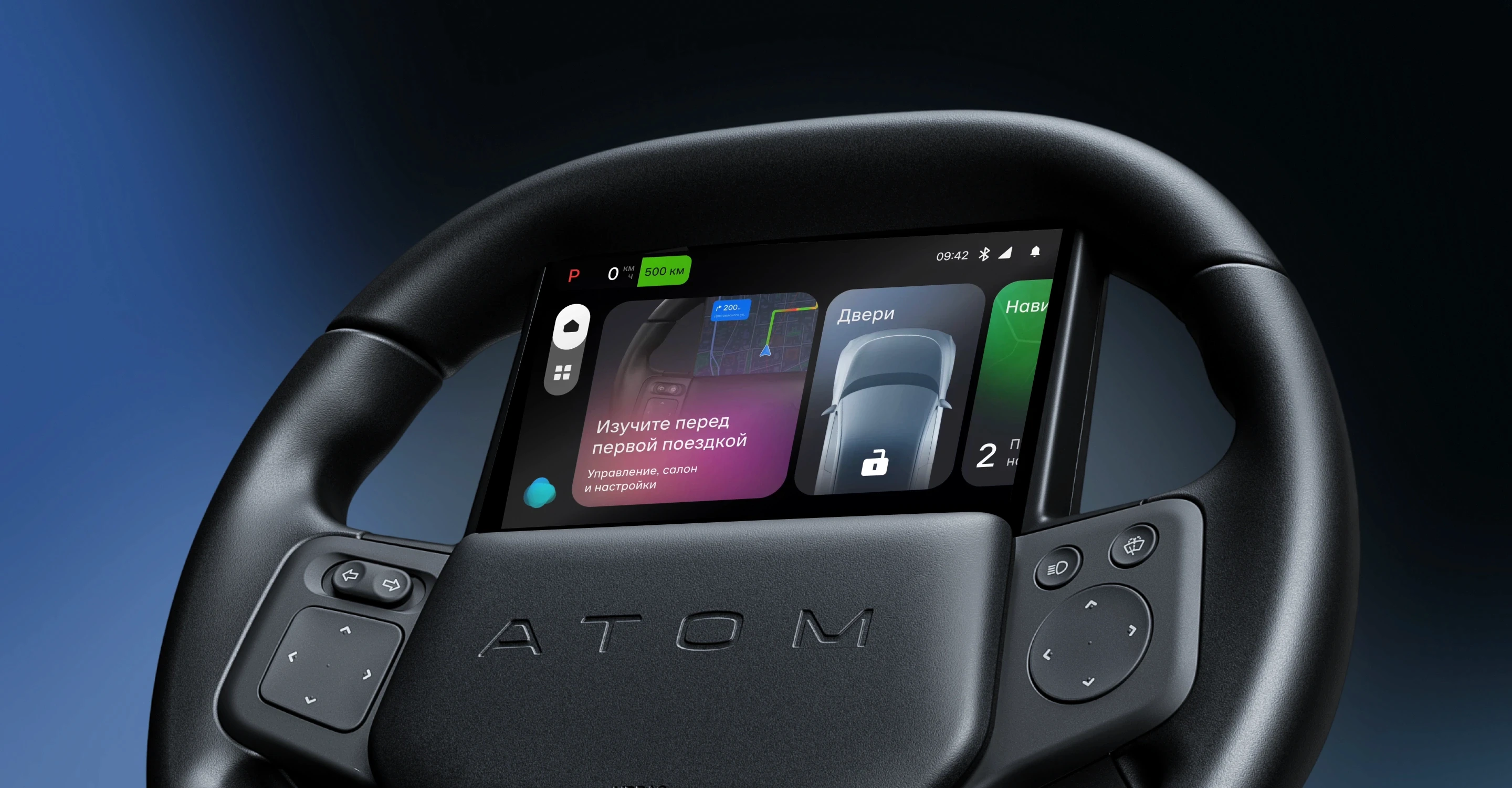
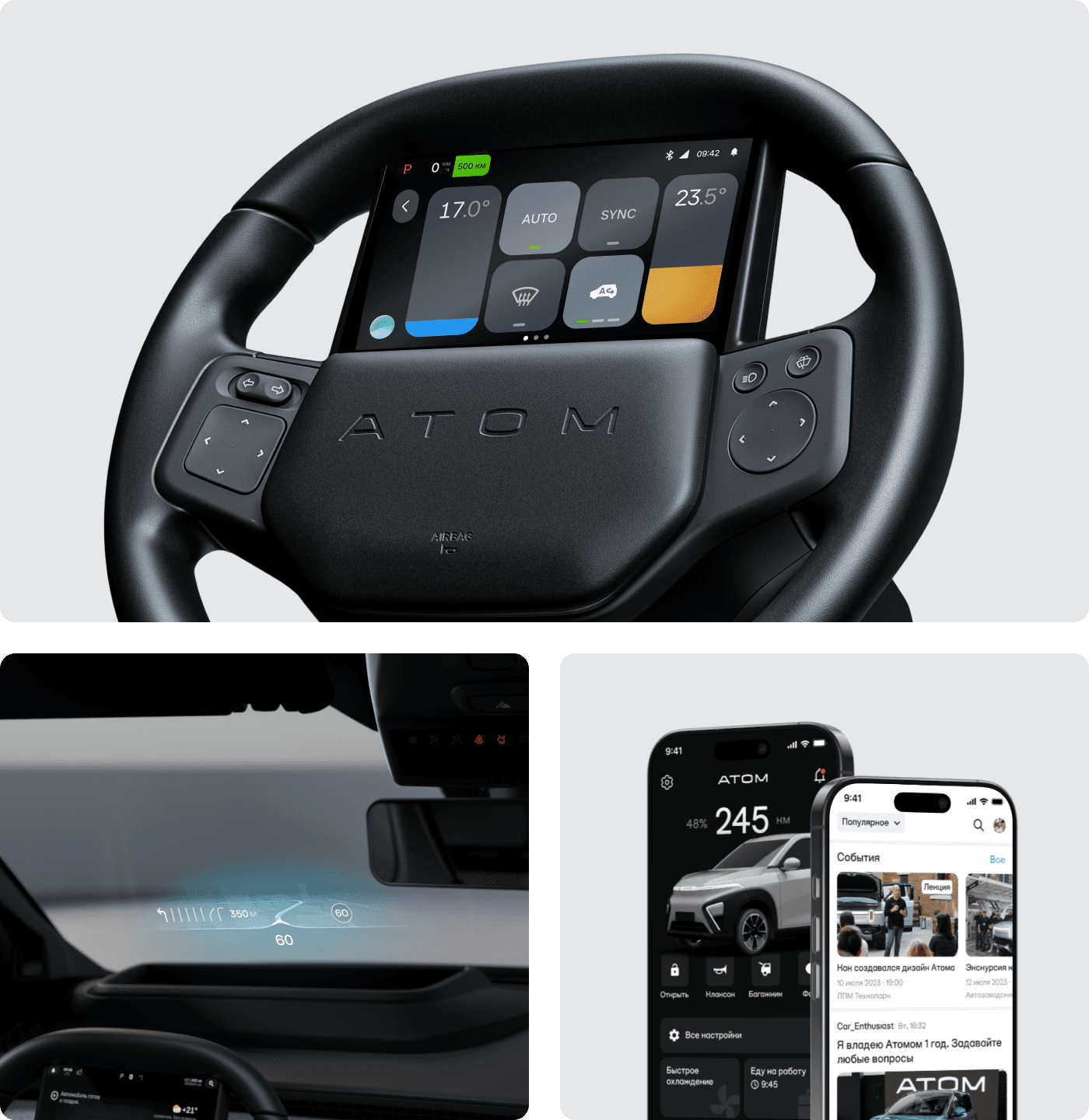
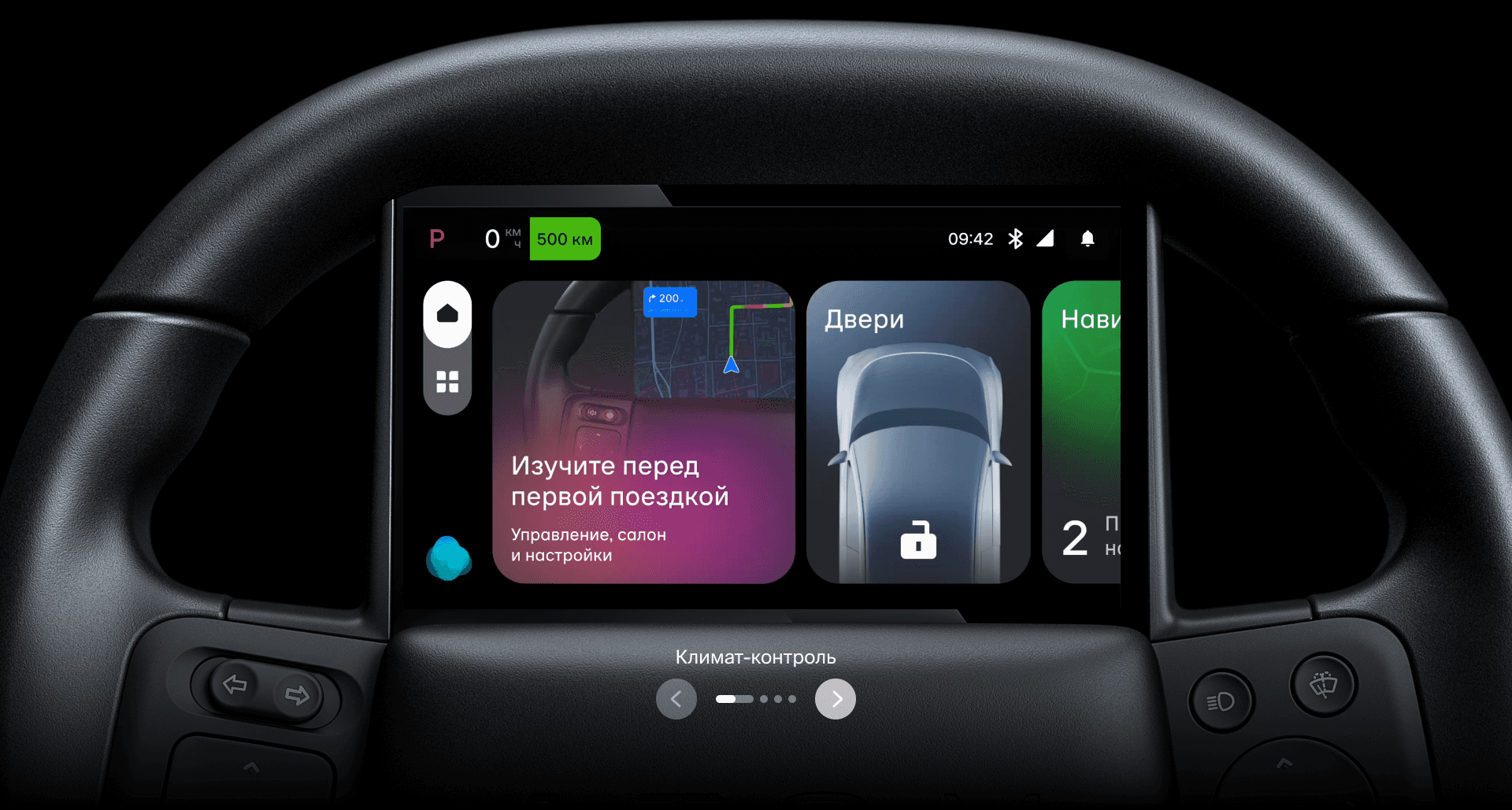
ATOM is a next-generation electric vehicle designed as a «gadget» with extensive personalization and digital city interaction. Unlike traditional cars, ATOM is built around its own operating system, requiring a completely new approach to automotive interfaces. My team and I worked on the core digital components, including the Steering Wheel Panel (SWP), Head-Up Display (HUD), and the mobile app ecosystem.
My role
I worked as part of a specialized design team in close collaboration with ATOM’s in-house designers and engineers. Over the course of three years, I contributed to everything from deep UX research and system architecture to high-fidelity prototyping in ProtoPie and testing on custom-built hardware stands.
The Challenge
The main challenge was to design a safe and intuitive UI for a vehicle that has almost no physical buttons. We had to move all controls — from climate to mirrors — into a digital environment (a 7-inch screen on the steering wheel) while ensuring the driver stays focused on the road. We also needed to synchronize the experience across the steering wheel screen, the HUD projection, and the mobile app
The Process
Research and Architecture
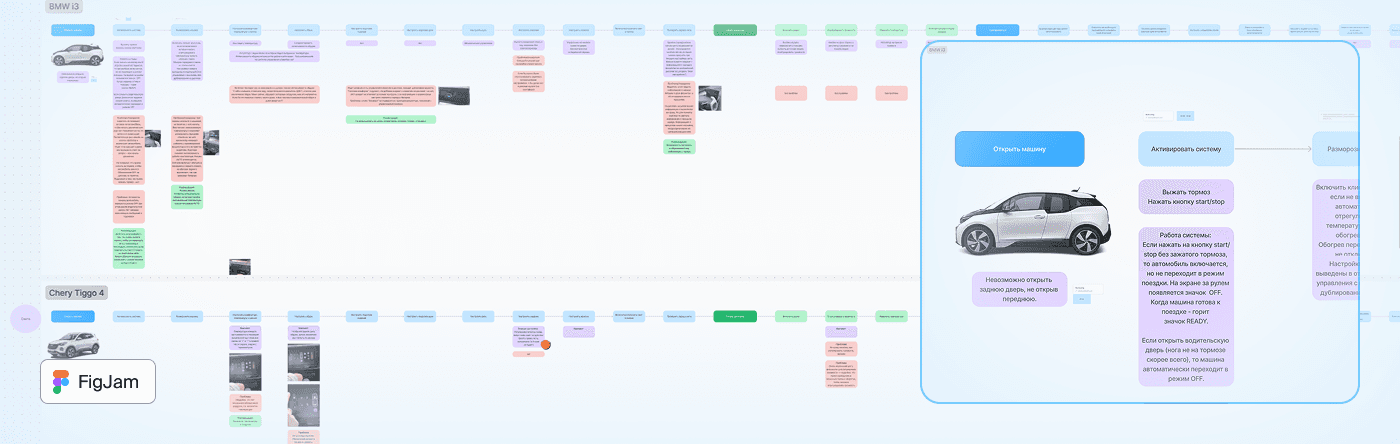
We began by systematizing technical specifications and creating complex CJMs. Working alongside analysts, we mapped out every possible scenario: from basic driving controls to ADAS (Advanced Driver Assistance Systems) and multimedia. This foundation allowed us to identify potential risks and ergonomic constraints early in the process.
Prototyping and Hardware Testing
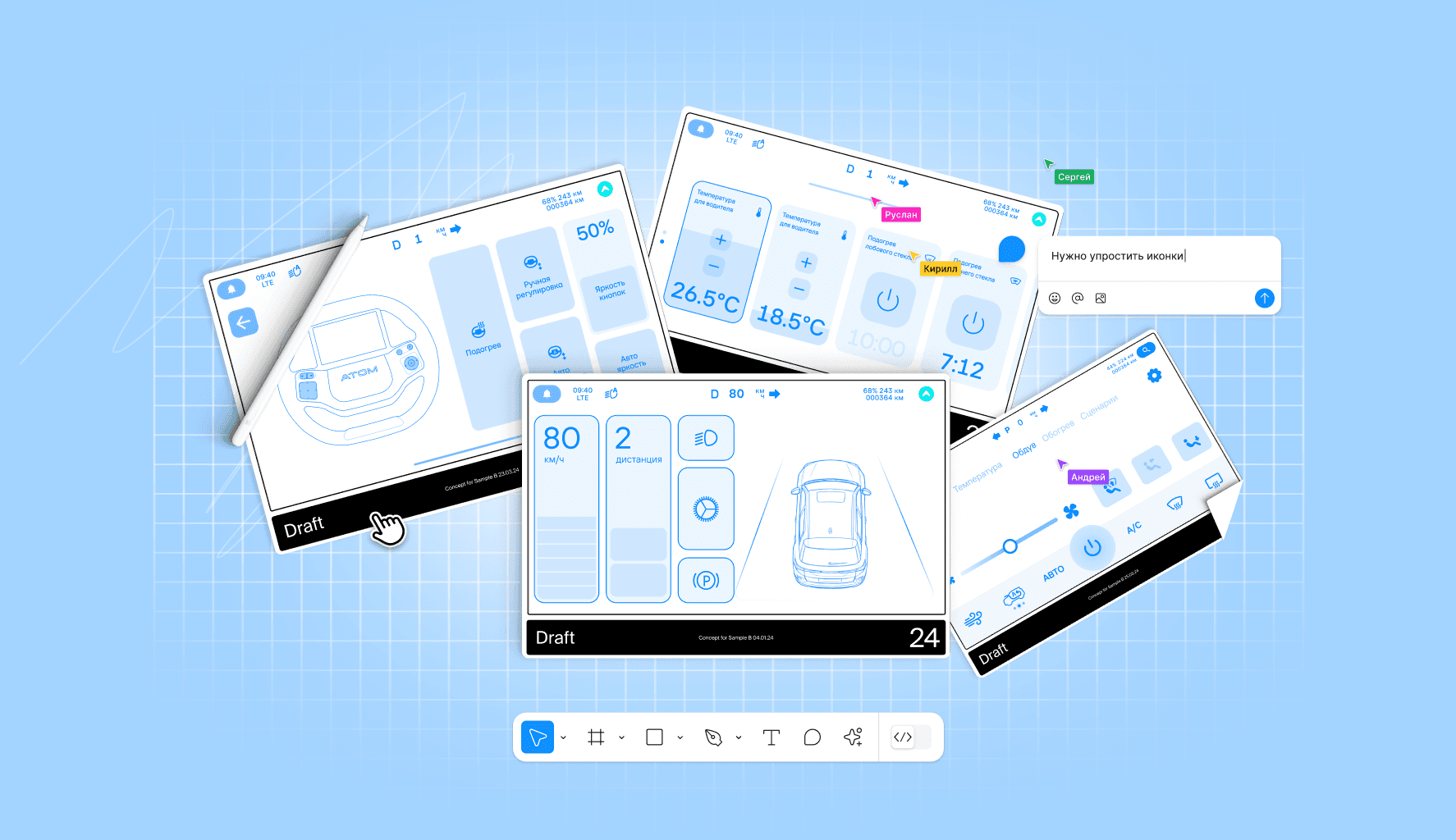
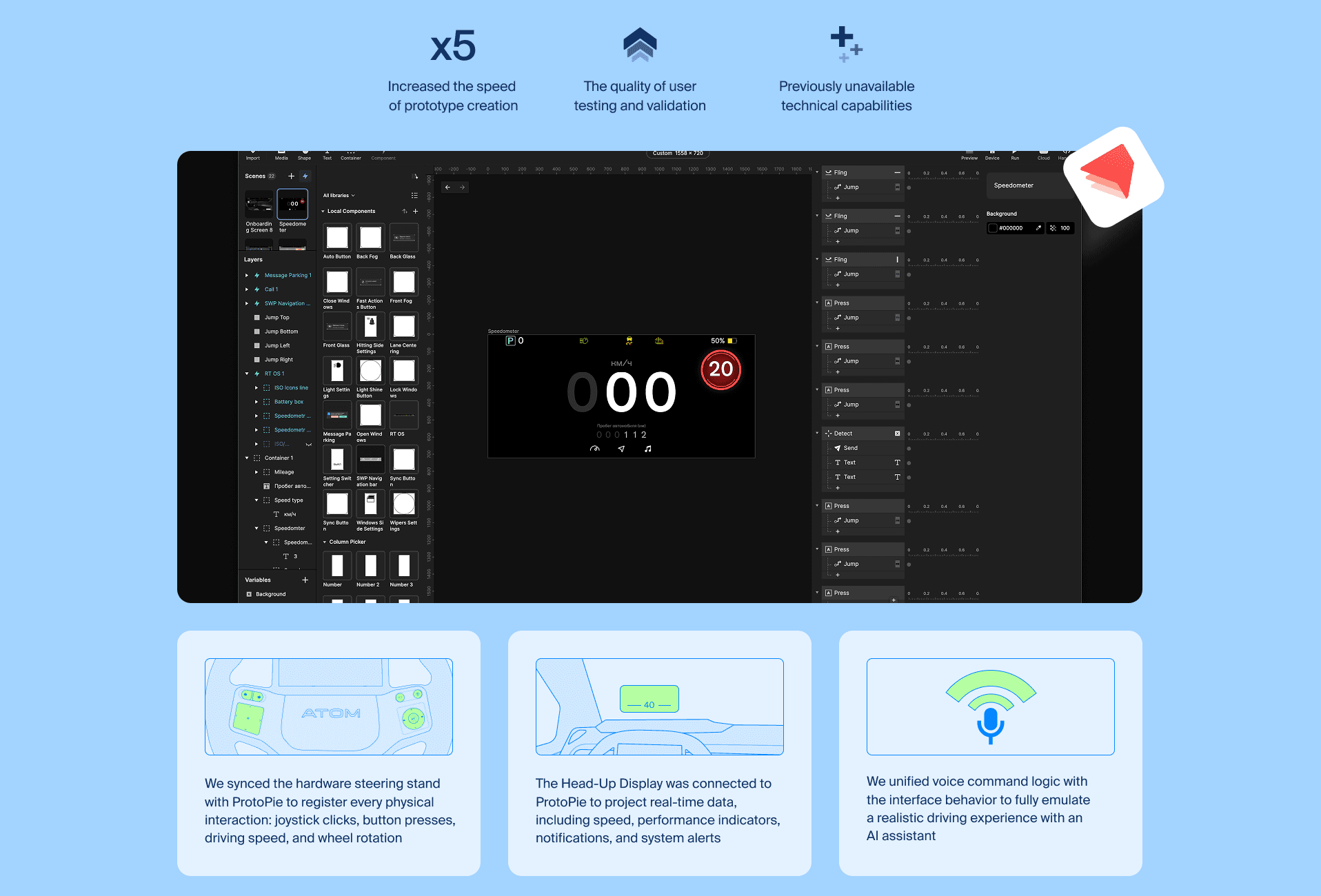
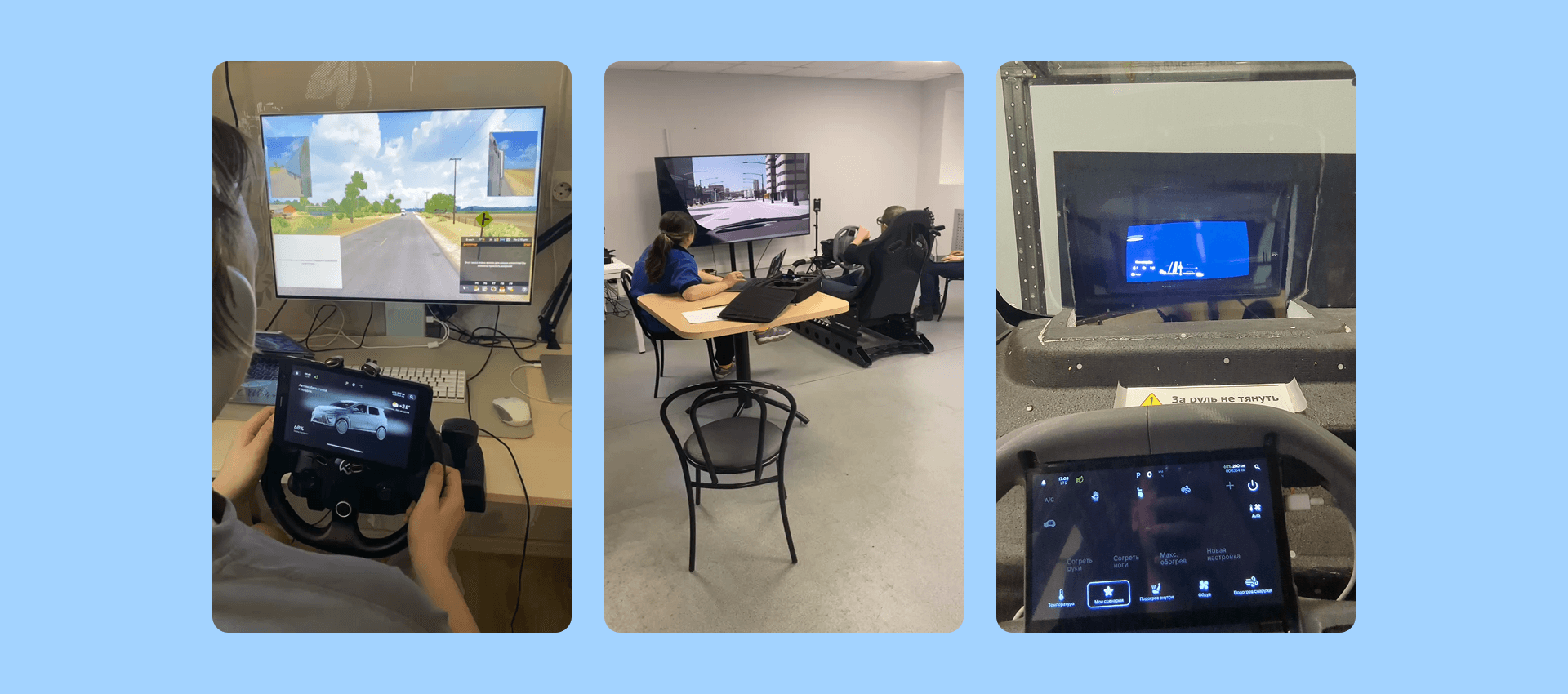
Because Figma couldn't handle the complexity of car interfaces and hardware synchronization, we integrated ProtoPie into our workflow. This increased our prototyping speed fivefold. We tested our designs on a series of evolving hardware stands — from simple gaming wheel setups to the advanced «BEREZKA» stand that mimics a real car environment with moving seats and mirrors.
Driving Control and ADAS
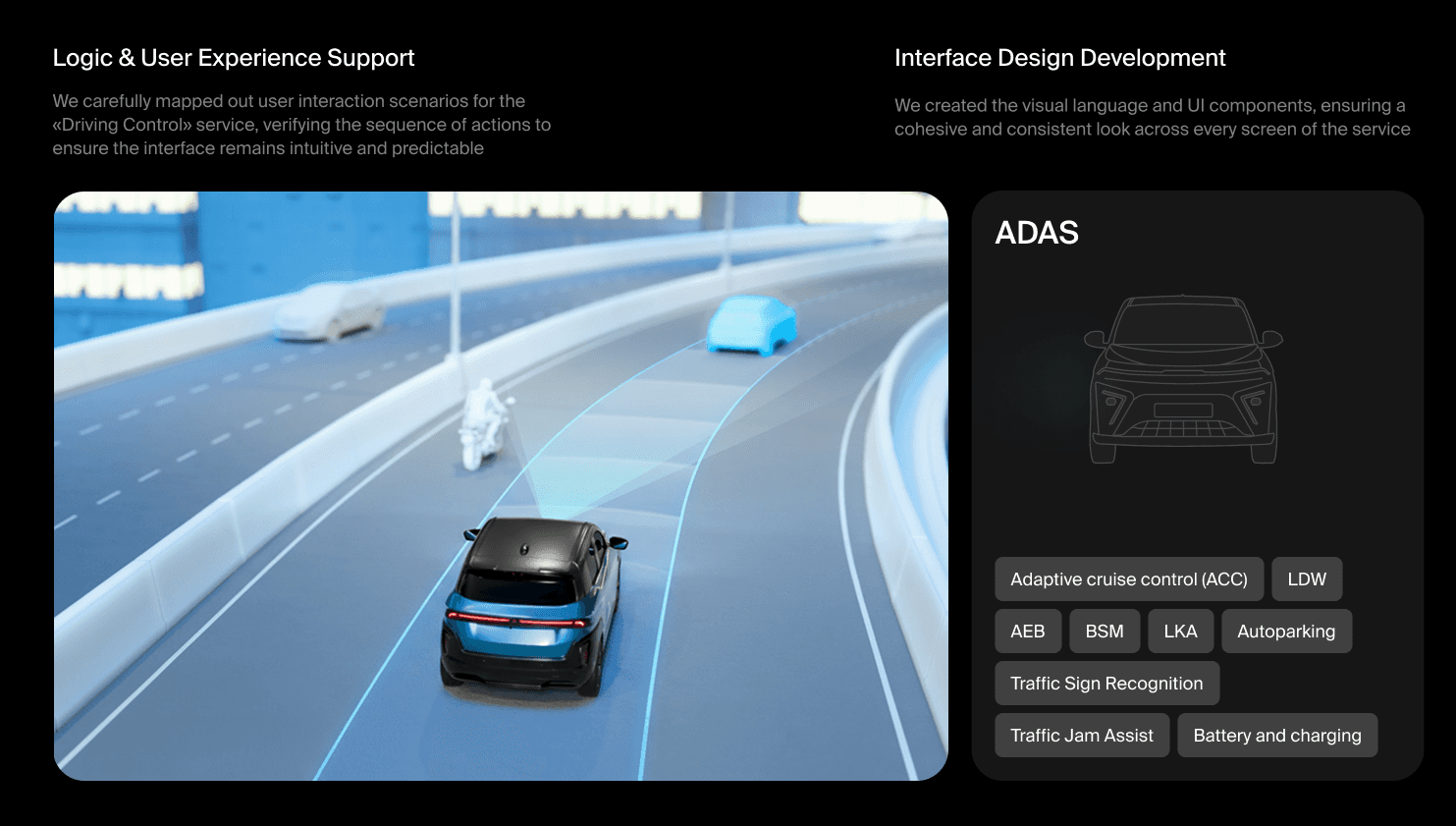
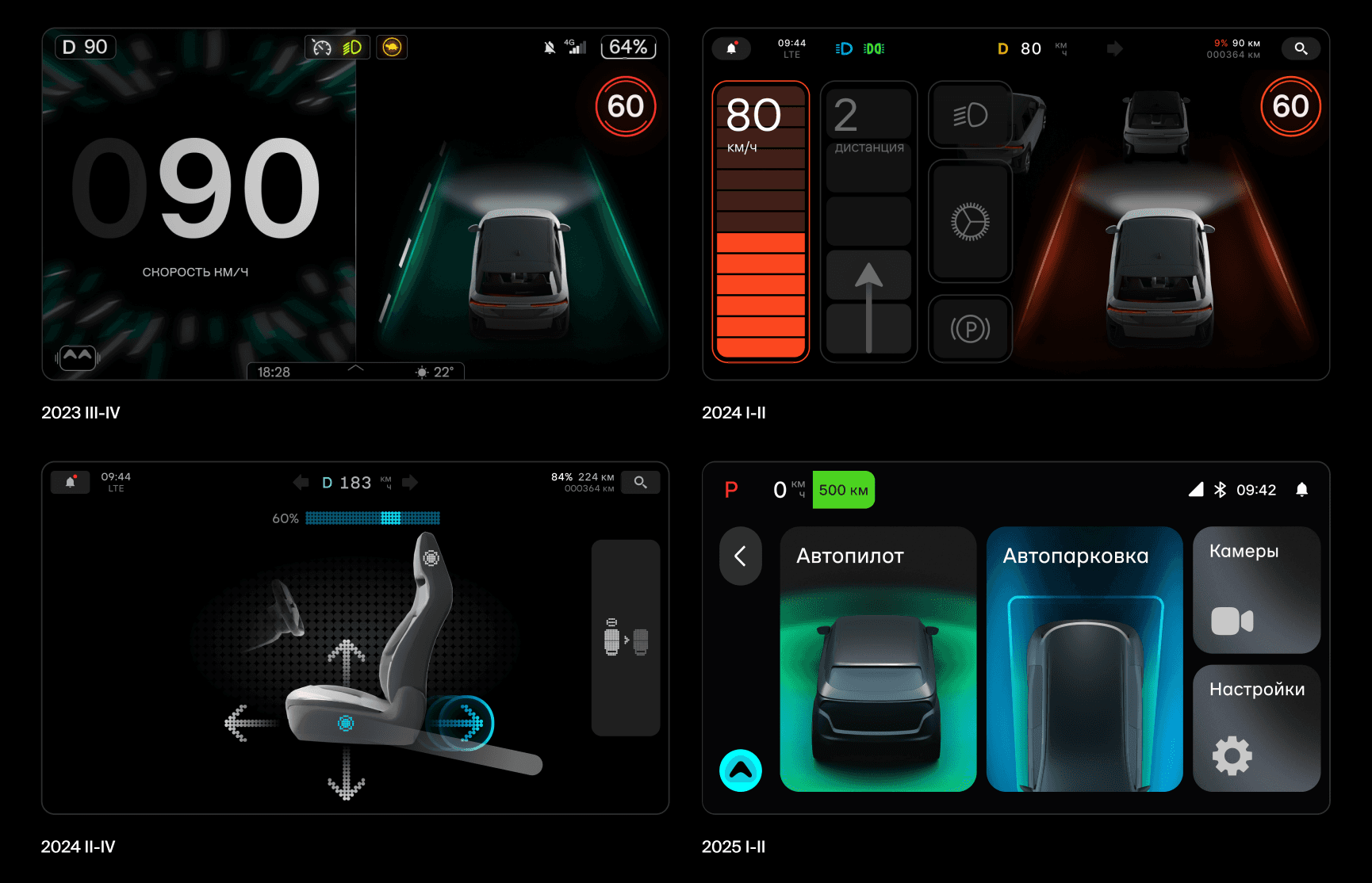
I focused on the logic and UX of the «Driving Control» service. This involved designing the visual language for adaptive cruise control, lane-keeping assist, and traffic jam pilot. We experimented with different conceptual approaches to make complex sensor data easy to read at a glance, ensuring a safe and predictable driving experience.
Results
Over two years, our team completed more than 1,000 tasks and developed 12 unique concepts for the ATOM ecosystem. We delivered 2,000+ mockups and iterated through 6 versions of the OS, supported by 3 distinct design systems. This deep involvement resulted in a stable, tested, and highly innovative interface that bridges the gap between a high-tech gadget and a functional urban vehicle. By utilizing advanced prototyping tools and physical testing stands, we ensured that the final design is not just visually stunning, but technically viable and safe for real-world city driving
Overview
ATOM is a next-generation electric vehicle designed as a «gadget» with extensive personalization and digital city interaction. Unlike traditional cars, ATOM is built around its own operating system, requiring a completely new approach to automotive interfaces. My team and I worked on the core digital components, including the Steering Wheel Panel (SWP), Head-Up Display (HUD), and the mobile app ecosystem.
My role
I worked as part of a specialized design team in close collaboration with ATOM’s in-house designers and engineers. Over the course of three years, I contributed to everything from deep UX research and system architecture to high-fidelity prototyping in ProtoPie and testing on custom-built hardware stands.
The Challenge
The main challenge was to design a safe and intuitive UI for a vehicle that has almost no physical buttons. We had to move all controls — from climate to mirrors — into a digital environment (a 7-inch screen on the steering wheel) while ensuring the driver stays focused on the road. We also needed to synchronize the experience across the steering wheel screen, the HUD projection, and the mobile app
The Process
Research and Architecture
We began by systematizing technical specifications and creating complex CJMs. Working alongside analysts, we mapped out every possible scenario: from basic driving controls to ADAS (Advanced Driver Assistance Systems) and multimedia. This foundation allowed us to identify potential risks and ergonomic constraints early in the process.
Prototyping and Hardware Testing
Because Figma couldn't handle the complexity of car interfaces and hardware synchronization, we integrated ProtoPie into our workflow. This increased our prototyping speed fivefold. We tested our designs on a series of evolving hardware stands — from simple gaming wheel setups to the advanced «BEREZKA» stand that mimics a real car environment with moving seats and mirrors.
Driving Control and ADAS
I focused on the logic and UX of the «Driving Control» service. This involved designing the visual language for adaptive cruise control, lane-keeping assist, and traffic jam pilot. We experimented with different conceptual approaches to make complex sensor data easy to read at a glance, ensuring a safe and predictable driving experience.
Results
Over two years, our team completed more than 1,000 tasks and developed 12 unique concepts for the ATOM ecosystem. We delivered 2,000+ mockups and iterated through 6 versions of the OS, supported by 3 distinct design systems. This deep involvement resulted in a stable, tested, and highly innovative interface that bridges the gap between a high-tech gadget and a functional urban vehicle. By utilizing advanced prototyping tools and physical testing stands, we ensured that the final design is not just visually stunning, but technically viable and safe for real-world city driving
Kirill Kuchma
Product Deisgner
Thanks for visiting
Thanks for visiting
Thanks for visiting